Expensive Mic, Terrible Audio: The Truth About Condenser Mics vs. USB Sticks for Streaming
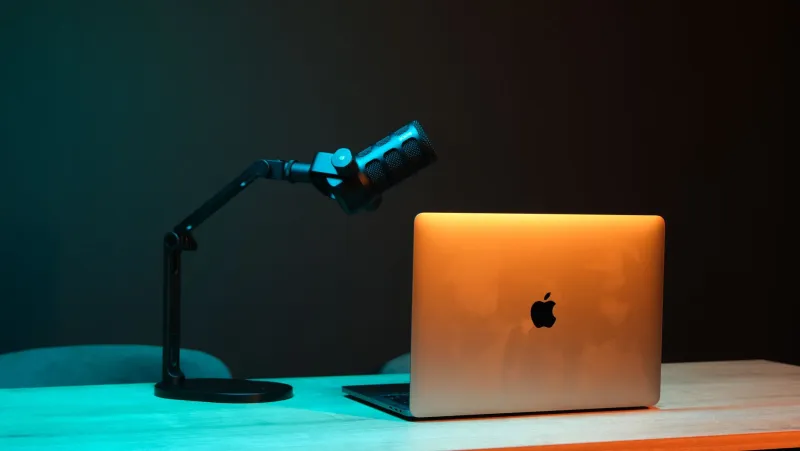
Let's paint a picture. You researched for weeks, watched every YouTube comparison video twice, and finally pulled the trigger on a large-diaphragm condenser microphone — the kind that sits in a shock mount, runs through an audio interface, and looks like it belongs in a professional recording studio. You go live. Someone in your chat types: "bro your mic sounds like a tin can."
Meanwhile, your buddy two states away is streaming on a $40 USB microphone he grabbed off Amazon Prime on a Tuesday afternoon, and his audio sounds clean, warm, and professional. What is going on?
This is the microphone paradox, and it trips up more streamers than almost any other piece of gear.
Condenser Mics Don't Forgive — They Expose
Here's what the spec sheets don't tell you: condenser microphones are extremely sensitive. That's the whole point. They pick up the delicate nuance of a vocalist in a treated studio, the subtle breath of a voice actor in a padded booth, the fine detail of an acoustic guitar in a quiet room.
Your home office is none of those things.
Condenser mics have a wide frequency response and high sensitivity, which means they're equally good at picking up your voice and your HVAC system humming, the street noise outside your window, the mechanical keyboard you refuse to stop using, and the hollow reverb bouncing off your drywall. Every one of those sounds gets captured with the same enthusiastic clarity. The result isn't studio-quality audio — it's studio-quality noise.
A USB microphone, by contrast, is typically built around a more forgiving cardioid dynamic or a tightly voiced condenser capsule with built-in processing that smooths over a lot of environmental sins. Less sensitivity, more forgiveness. For untreated rooms — which describes basically every streaming setup in America — that's actually an advantage.
The Gain Staging Problem Nobody Talks About
Even when streamers do everything else right, gain staging trips them up constantly. Here's the chain: your condenser mic runs into an audio interface, which feeds into your streaming software. There are at least three separate gain stages in that signal path — the interface preamp gain, the software input level, and potentially a plugin or compressor on top of that.
Crank the preamp too high and you're amplifying noise floor along with your voice. Set it too low and your streaming software compensates by boosting the signal digitally, which introduces its own artifacts. Finding the sweet spot requires some actual audio engineering knowledge, and most people are just guessing.
A USB microphone collapses that chain dramatically. The preamp is built into the mic itself, it connects directly to your PC via USB, and your streaming software sees it as a clean input. There are fewer places for things to go wrong. That simplicity is worth a lot more than marketing copy suggests.
Your Room Is the Real Problem
Audio engineers have a saying: you can't mix your way out of a bad room. The same applies to streaming. If your space has hard floors, bare walls, and a standard drop ceiling, you're essentially broadcasting from inside a cardboard box. Sound bounces everywhere, and that reverb smears your voice into mush regardless of how much you spent on the mic itself.
Proper acoustic treatment — foam panels, bass traps in corners, a thick rug, even heavy curtains — makes a bigger difference to your stream audio than almost any microphone upgrade. Seriously. A $40 USB mic in a treated room will beat a $300 condenser in an untreated one every single time.
If full acoustic treatment isn't in the budget or the lease agreement, try the poor man's solution: get physically close to your microphone. The closer you are to any mic, the better your voice-to-room-noise ratio gets. Six inches away sounds dramatically different from eighteen inches away, and it costs nothing.
The Psychology of Expensive Gear
There's also something worth naming honestly: gear psychology is real, and it affects all of us. When you spend $300 on a microphone, your brain wants it to be the right decision. So you attribute audio problems to everything except the mic — your interface settings, your room, your streaming software, your PC. The mic becomes untouchable.
But the data doesn't lie. Blind audio tests run by communities on Reddit's r/Twitch and various streaming forums consistently show that listeners cannot reliably distinguish between a well-placed $50 USB mic and a poorly-treated $300 condenser setup. What they can hear is background noise, reverb, and distortion — all of which are more likely to come from your environment than your capsule quality.
So What Should You Actually Buy?
Here's a practical breakdown based on where you're starting from:
Under $75 — USB and done: The Audio-Technica ATR2100x-USB and the Samson Q2U are both dynamic USB microphones that punch way above their price. Dynamic capsules reject background noise naturally, they're forgiving in untreated rooms, and the USB connection keeps setup dead simple. Either of these will serve most streamers better than an expensive condenser in a bare bedroom.
$75–$150 — USB condenser with some room treatment: If your space is reasonably quiet and you've added even basic foam panels, something like the Blue Yeti Nano or the HyperX QuadCast S becomes a genuinely excellent option. These are USB condensers with built-in gain control and solid onboard processing. Still no interface required.
$150–$300 — Interface + dynamic mic, treated room required: If you're at this budget and serious about audio quality, a Focusrite Scarlett Solo paired with a Shure SM7B or an Electro-Voice RE20 is the professional streamer's standard for good reason. But — and this cannot be stressed enough — only if your room is treated. Without acoustic treatment, you're wasting the investment.
Above $300 — You already know what you're doing: At this level, you're deep enough into audio that you're not reading this article for basic advice. Go off.
The Bottom Line
Expensive microphones are not bad. They're just tools designed for specific environments, and most streaming setups are not those environments. Before you drop another dollar on microphone hardware, spend an afternoon addressing your room acoustics and dialing in your gain staging. You might be shocked to discover your current mic — whatever it costs — sounds completely different when the fundamentals are right.
And if you're still on the fence? Borrow a friend's cheap USB stick, set it up in your space, and do an honest A/B test on stream. Let your audience vote. The answer might sting a little, but your audio will thank you.